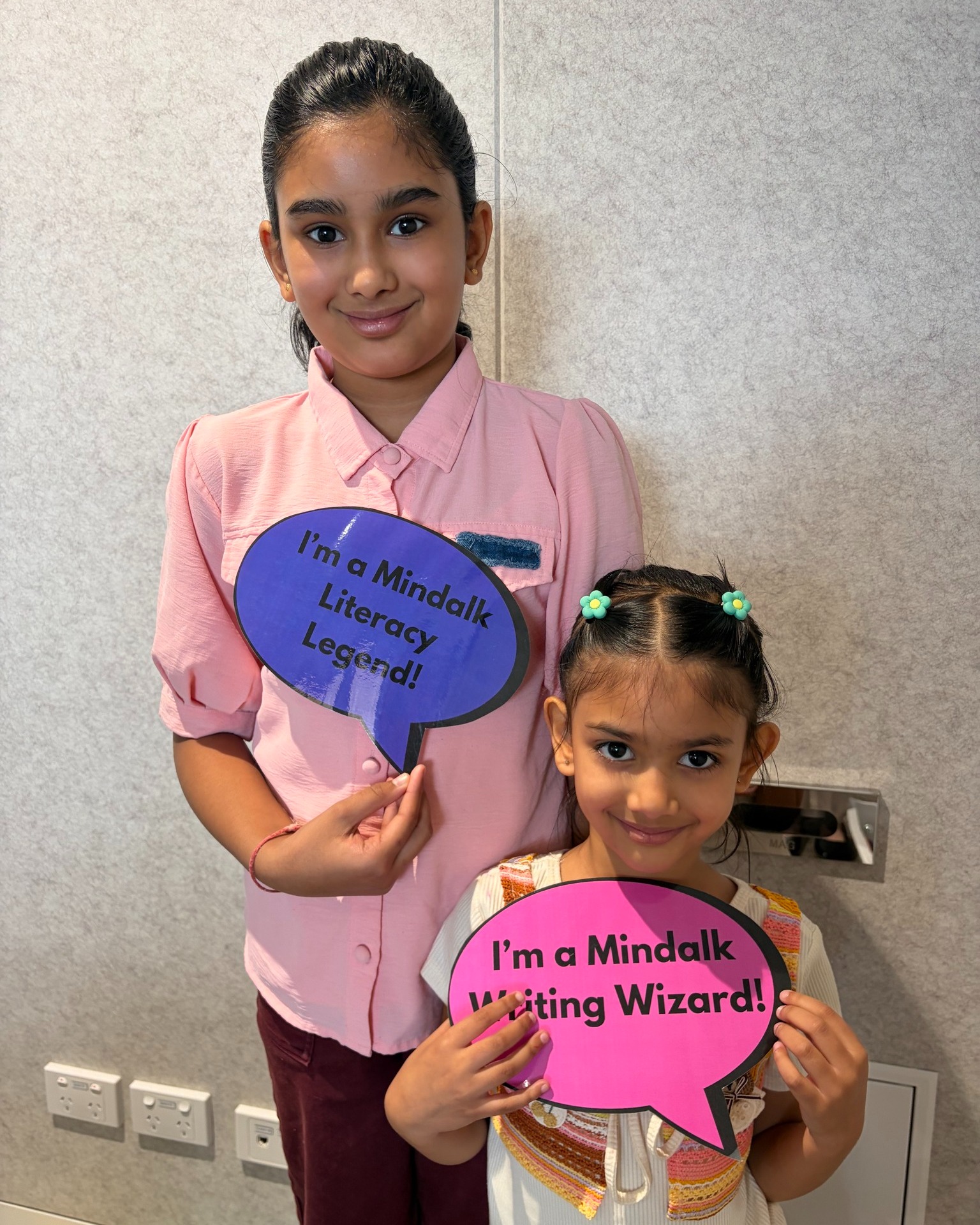
This foundational year focuses on developing essential literacy and numeracy skills, building social and emotional capabilities, and fostering curiosity and confidence as learners. Through explicit, structured teaching, students master the basics of reading, writing, and number while developing independence, resilience, and positive relationships with peers and teachers. We create a nurturing, stimulating environment where every child feels safe, valued, and ready to learn.

English – Students begin their literacy journey with systematic phonics instruction, learning letter sound relationships, blending and early reading strategies. They build oral language through conversations, stories and rhymes while developing phonological awareness. Students learn to form letters, write simple words and explore early text creation. They engage with a range of beginning text types, including descriptions, retells, recounts, opinions, simple narratives and information reports, building confidence as emerging readers and writers.
Mathematics – Students build early confidence with numbers, patterns and problem solving through hands-on exploration and explicit teaching. They connect number names, numerals and quantities to 20, using concrete materials to count, compare and order amounts. Students investigate addition and subtraction in meaningful, real-life contexts. They explore shapes, simple patterns, measurement and position, developing mathematical language and reasoning as they sort, classify, make comparisons and explain their thinking. Through active, playful learning, they grow their ability to notice relationships, recognise change, and use emerging problem-solving strategies with increasing independence.
Humanities – In History, students explore personal and family histories, examining changes over time and sequencing events. They investigate how individuals and families have changed, and the significance of special days and commemorations. In Geography, students define places and describe natural and constructed features at a local scale, including weather and seasons. They identify how people are connected to different places, explain the value of places, and describe ways places can be cared for. Students collect and record geographical data, represent information in tables and labelled maps, and describe location using geographical terms.
The Arts – Students explore Visual Arts through drawing, painting, collage, and sculpture, expressing ideas and experimenting with different materials. In Performing Arts, they engage in drama through role-play and storytelling, create and perform simple music and songs, and explore movement and dance. Students develop creative expression, imagination, and appreciation of the arts.
Health and Physical Education – Students develop fundamental movement skills including running, jumping, throwing, and catching. They learn about healthy choices, personal safety, emotions, and respectful relationships. Physical activities focus on coordination, balance, and confidence while promoting enjoyment of movement and active participation.
Science – Through structured investigations and observations, students explore the natural and physical world. They learn about living things, materials, and how objects move. Foundation scientists ask questions, make predictions, and record observations, developing curiosity and foundational scientific thinking.
Social and Emotional Learning Snapshot – Students learn to recognise and name their feelings, understand that everyone has emotions, and practice safe ways to express them. They explore what it means to be a kind friend, learn to take turns and share, and practice asking for help when needed. Students develop listening skills, learn classroom routines that help everyone feel safe, and begin to understand that their actions affect others.
Technologies – Students are introduced to digital tools and safe technology use. They explore how everyday technologies help people and begin using digital devices for creating, communicating, and learning. Students also engage in simple design challenges, planning and making solutions to everyday problems.
Our core learning areas are taught using structured, evidence-based practices aligned with the Victorian Curriculum 2.0 and the Victorian Teaching and Learning Model (VTLM 2.0). Lessons follow the Mindalk Instructional Model with a clear learning pathway, with explicit teaching, guided practice, feedback, and opportunities to apply knowledge. Teachers differentiate instruction and adjust supports so every student can access and extend their learning. As students move through year levels, their knowledge and skills build in complexity, ensuring strong progression and deep understanding across all core subjects.
Foundation students enjoy many exciting firsts at Mindalk, including our 100 Days of School celebration and introduction to the camping program. Camps and excursions enrich learning by giving students access to new environments, hands-on experiences and opportunities to build independence and friendships. Our whole-school camping pathway begins in Prep with a cohort breakfast and grows each year, gradually increasing from on-site events to multi-night offsite camps. By year’s end, Foundation students transition confidently into Year 1 as capable, curious learners.
Foundation homework includes nightly reading using a school decodable book or Little Learners Love Literacy Online, and number fluency practice through Numbots online. Teachers provide login details in Term 1. Activities typically take 15 minutes daily.
Teachers provide regular communication through school diaries, informal conversations at pick-up, scheduled parent-teacher conferences each semester, and formal written reports. You’re welcome to request additional meetings anytime.
We identify learning needs early through Foundation Assessment screening. Support is provided through tiered intervention: quality classroom teaching for all, targeted small group instruction for some, and intensive individual support for few. Our learning support team collaborates with families throughout.